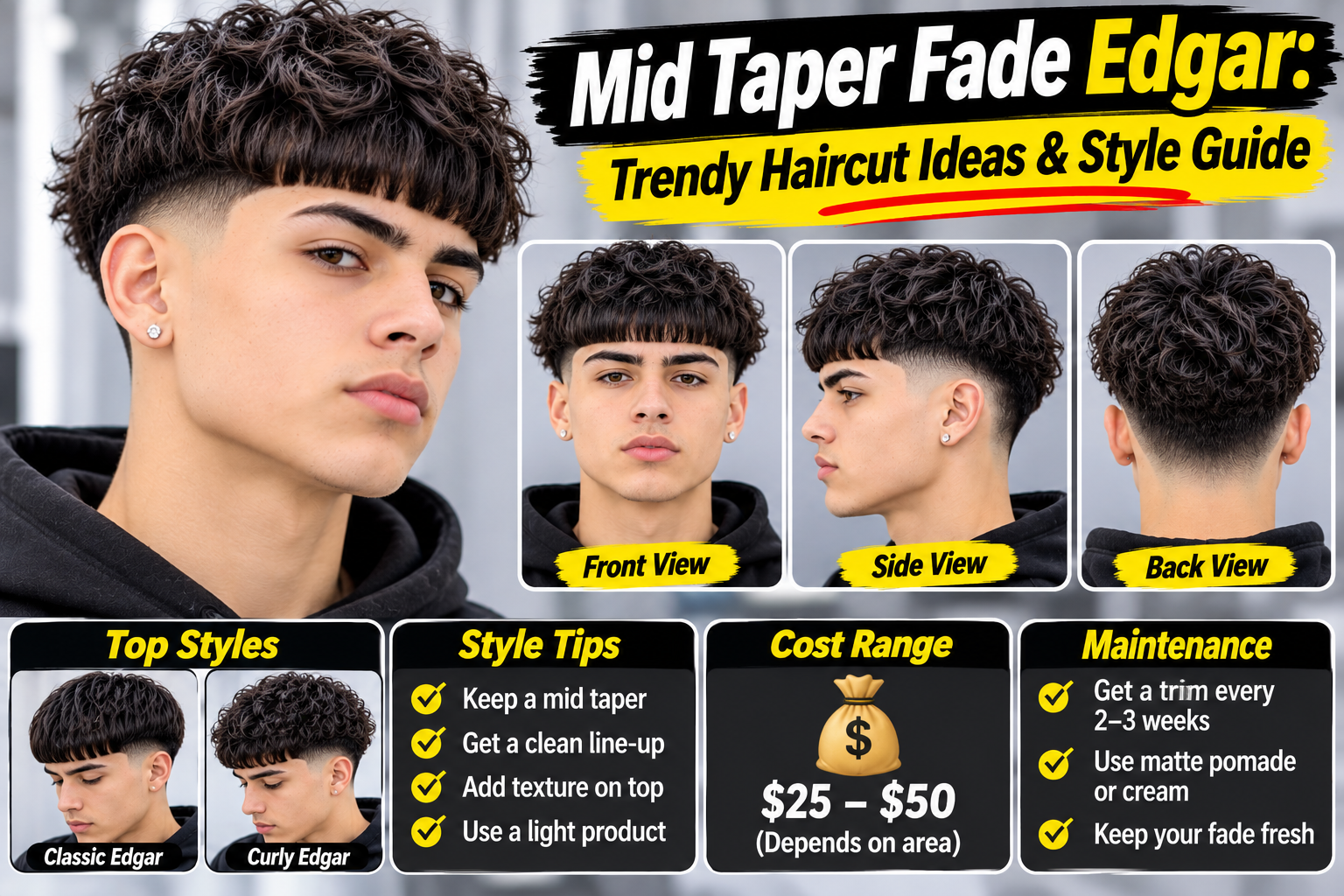
Mid Taper Fade Edgar: 12 Trendy Haircut Ideas & Style Guide
If you’ve been scrolling barbershop reels, you’ve seen it everywhere. The mid taper fade Edgar cut is the one guys are walking in and pointing at on their phones. It’s not going anywhere in 2026, and I want to break down exactly why, plus show you eight ways to wear it.
I’ve cut this style hundreds of times. So instead of vague style tips, you’re getting real guard numbers, real price ranges, and the actual words to use with your barber.
Mid Taper Fade Edgar Cut Explained: What Makes It Different
A mid taper fade Edgar cut pairs a fade that starts halfway up the sides with a blunt, straight-line fringe across the front. The fringe is the signature move. It sits low on the forehead and gets cut in one clean, hard line instead of blending into layers.
Most fades just taper the sides and leave the top loose. The Edgar cut adds structure up front. That’s why it reads as sharper and more intentional than a regular fade.
The mid part refers to where the fade starts. A low fade starts near the ear. A high fade starts near the temple. A mid taper fade edgar cut splits the difference, starting about an inch above the ear.
8 Best Mid Taper Fade Edgar Cut Styles
Here’s the full lineup. Each one uses the same mid taper base but changes the top texture, the fringe, or the detail work.
What taper fade is best?
A mid taper fade is usually the safest, most versatile choice for the Edgar cut. It’s shorter than a low fade but not as steep as a high fade, so it works for school, work, and everyday styling without looking extreme.
What is the best Edgar cut?
The classic mid taper Edgar cut with a straight fringe line is the most requested version. It gives you the clean, geometric look without needing much daily styling effort.
Is mid taper fade real?
Also read more styles:https://tazbofyr.com/wp-admin
Yes, mid taper fade is a real, specific fade type used by barbers worldwide. It describes the exact starting point of the fade on the head, not just a general trend name.
Is the Edgar cut just a bowl cut?
No, the Edgar cut is not a bowl cut, even though people compare them online. A bowl cut has even length all around with no fade. The Edgar cut has a tight fade on the sides and back, paired with a sharp fringe up front.
Classic Cuts: The Signature Line
These two versions are the foundation. If you’re new to the style, start here.
Classic Mid Taper Edgar Cut

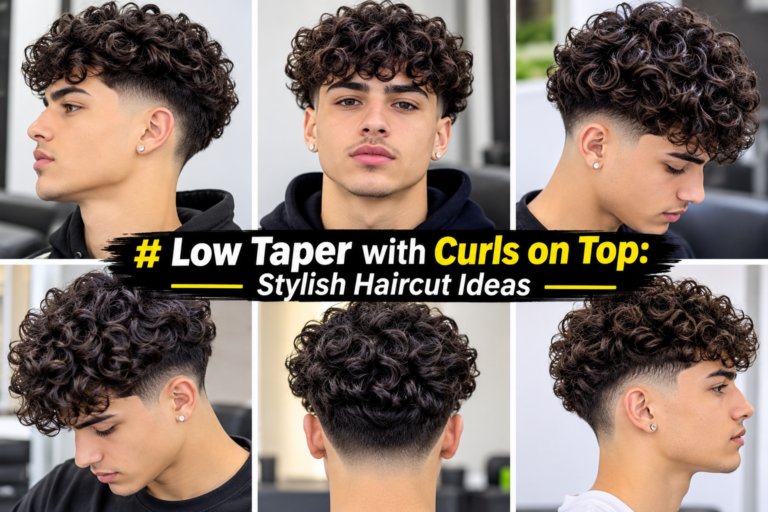
This is the original, no-frills version of the cut. It uses a hard fringe line across the forehead with a smooth mid taper fade underneath, no texture added on top. It suits guys with straight or slightly wavy hair and an oval or square face shape. Ask for a #3 guard on top and a #2 on the sides, blended into skin near the ear. Expect to touch up the fringe every two to three weeks to keep the line sharp.
Edgar Cut with Straight Hair

Straight hair holds the fringe line better than any other hair type, which is why this version looks the cleanest. The straight fringe lays flat naturally, so there’s almost no styling product needed day to day. Barbers usually leave the top around 1.5 to 2 inches for straight hair to keep the line crisp. A light pomade in the morning is all you need to keep flyaways down.
Textured and Wavy Variations
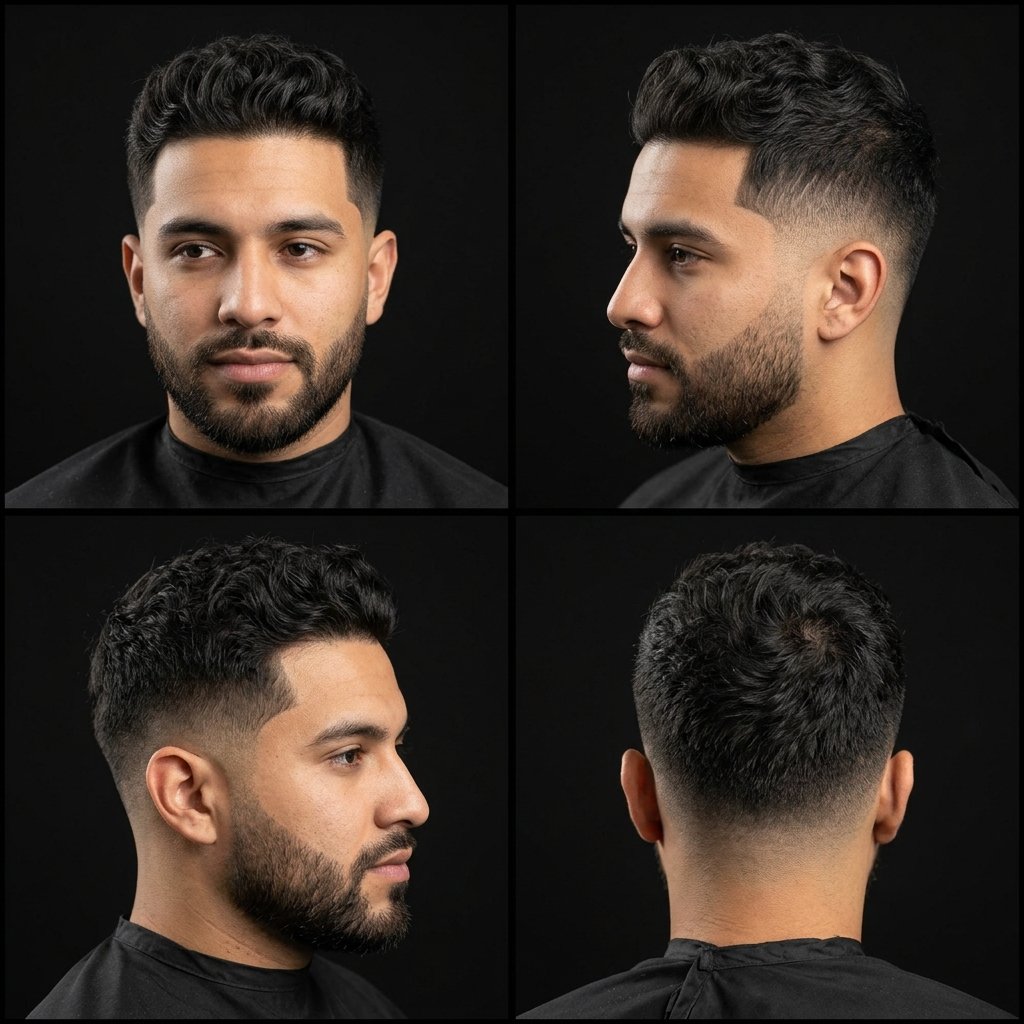
If a flat, blunt fringe feels too stiff for you, these three add movement without losing the edge.
Wavy Edgar Cut
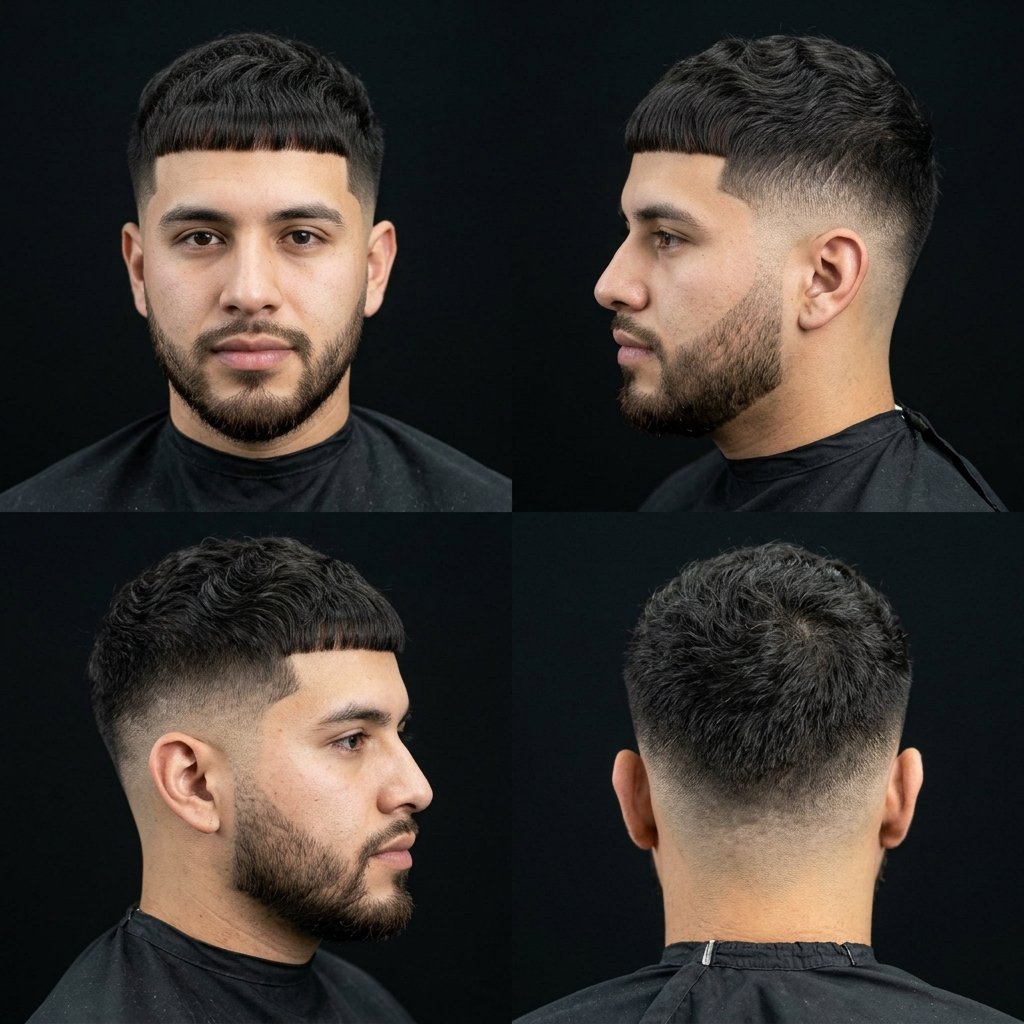
The wavy Edgar cut keeps the fringe line but lets natural wave show through the top instead of forcing it flat. This works best for guys with type 2 wavy hair who don’t want to fight their texture every morning. Barbers usually leave the top slightly longer, around two inches, so the wave has room to move. A sea salt spray after washing helps the wave sit without looking messy.
Textured Edgar Cut

This version uses point-cutting on top to break up the blunt fringe just slightly, giving a softer, choppier finish. It suits guys who want the Edgar cut but feel the classic line looks too harsh for their face. The barber usually texturizes with scissors over a comb, keeping length around 2 inches. Use a matte clay and scrunch upward for daily styling instead of combing flat.
Curly Edgar Cut
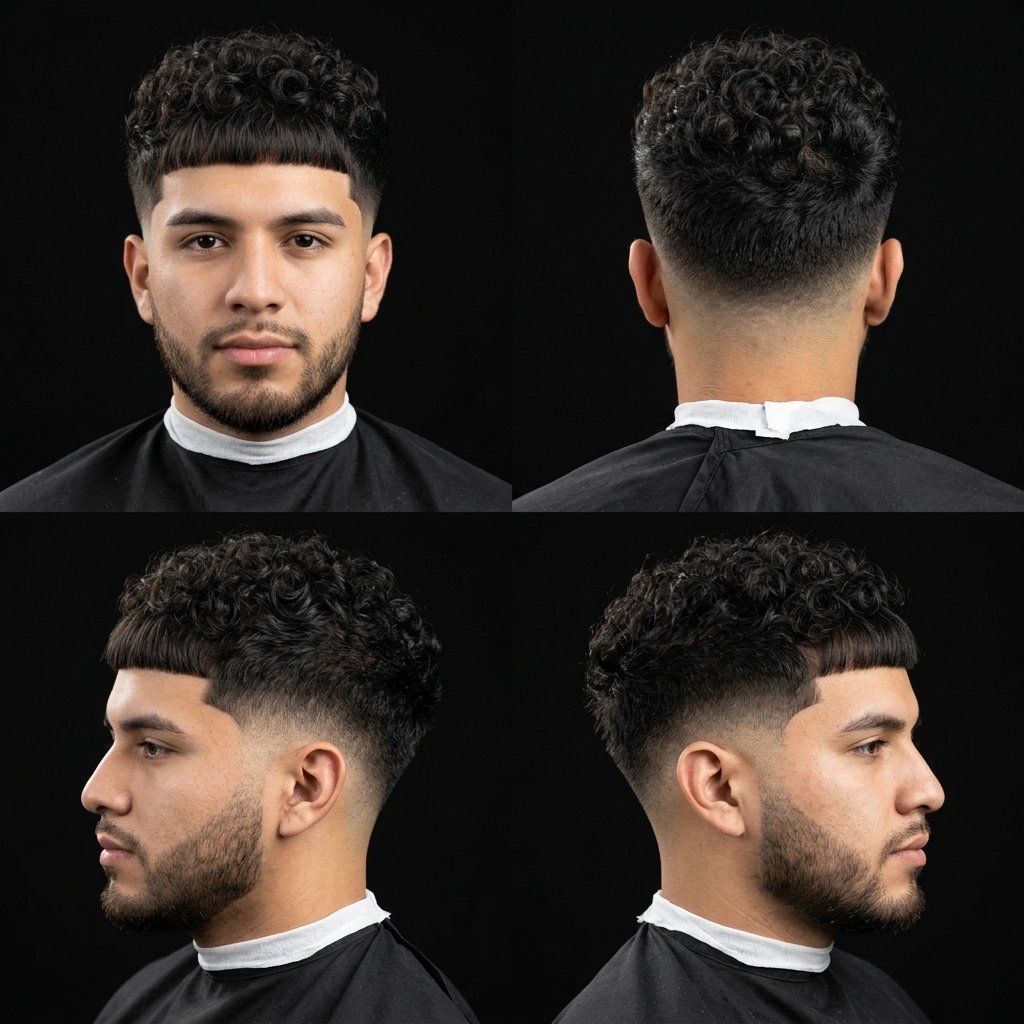
Curly hair changes the whole shape of this cut, since the fringe naturally lifts instead of lying flat. This works great for guys with type 3 curls who want structure without straightening their hair. Barbers often cut the fringe slightly longer than usual, around 2.5 inches, since curls shrink up once dry. A curl cream applied to damp hair keeps the fringe defined instead of frizzy.
Detail Work
These two add a personal touch on top of the base fade.
Edgar Cut with Design

This version adds a shaved line, part, or small pattern into the fade section for extra detail. It’s popular with teenagers and guys who want their cut to stand out on social media. Most barbers charge an extra $5 to $15 for a simple line design. Designs need a touch-up every one to two weeks, since fade lines grow out fast.
Edgar Cut with Beard Connect

This version connects the sideburn into the beard line, so the fade flows straight into facial hair with no gap. It works best for guys who already keep a short beard or heavy stubble. Barbers fade the sideburn down to skin, then blend it right into the beard using clippers over comb. Trim the connecting line every week to stop it from growing into a patchy gap.
Low-Maintenance Version
If daily upkeep isn’t your thing, this last one is built for you.
Short Fringe Edgar Cut
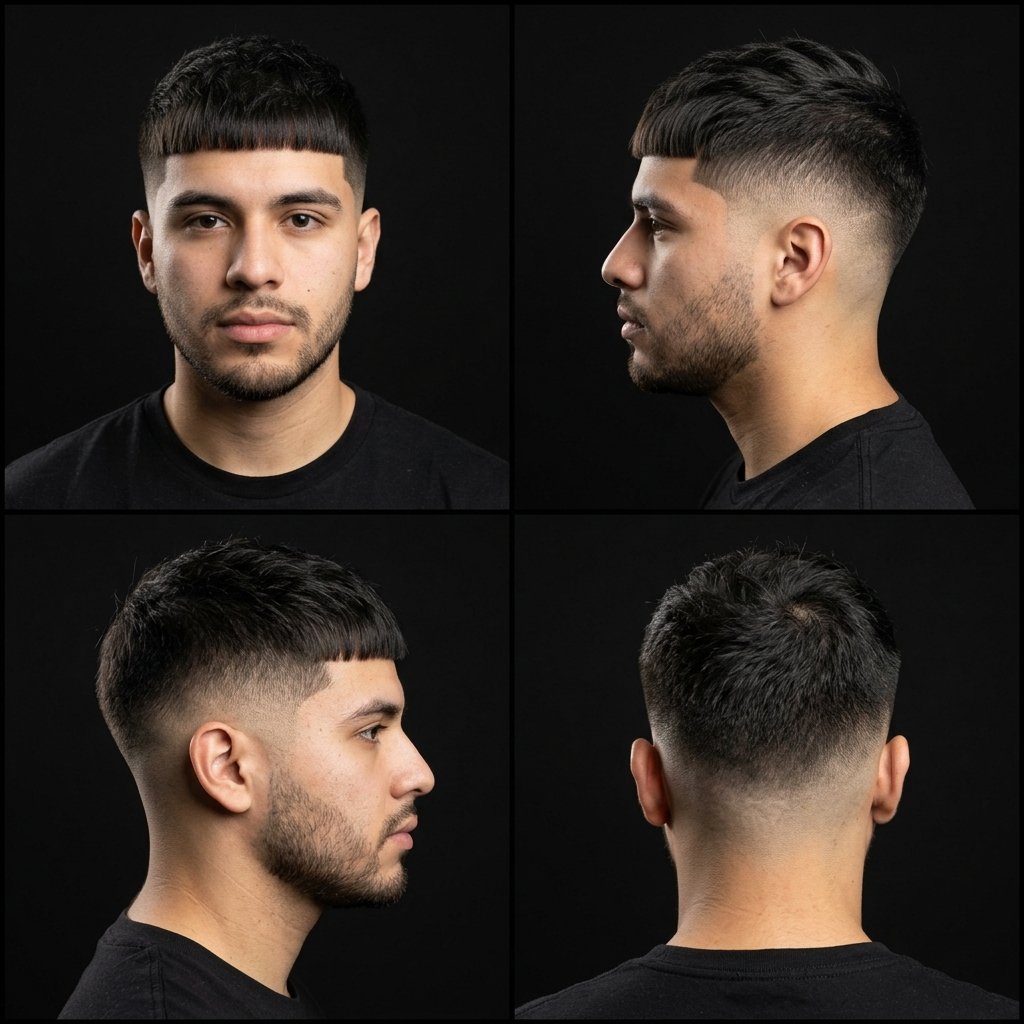
This version shortens the fringe itself, landing closer to an inch instead of the usual blunt bang length. It suits guys who liked the look of the Edgar cut but didn’t want hair near their eyebrows. A shorter fringe barely needs styling product and holds its shape longer between cuts. Most guys stretch this version to a four-week cut cycle instead of two to three weeks.
Why the Edgar Cut Took Over in 2026
The mid taper fade Edgar cut blew up because it photographs well and reads as deliberate. Social media rewards sharp lines, and this cut delivers a clean line every single time it’s freshly cut.
It also crosses cultures and age groups easily. You’ll see it on teenagers, college guys, and even professional men in their 30s and 40s now.
Pros and Cons: What You’re Signing Up For
| Pros | Cons |
| Sharp, photo-ready look | Needs fringe touch-ups every 2-3 weeks |
| Works with most hair types | Grows out visibly fast |
| Pairs well with beards | Not office-conservative everywhere |
| Fairly quick to cut, 20-30 minutes | Hard to fix if a barber miscuts the line |
Choosing by Hair Type: Where the Fringe Line Holds Best
Your hair type decides how sharp that fringe line looks and how long it holds up between cuts.
Straight Hair

Straight hair gives the crispest, most defined fringe line with almost no effort. The line stays visible for the full growth cycle before needing a trim.
Wavy Hair

Wavy hair softens the line slightly but still holds the overall Edgar shape well. Expect to use a light styling cream to keep the wave from lifting the fringe.
Curly Hair
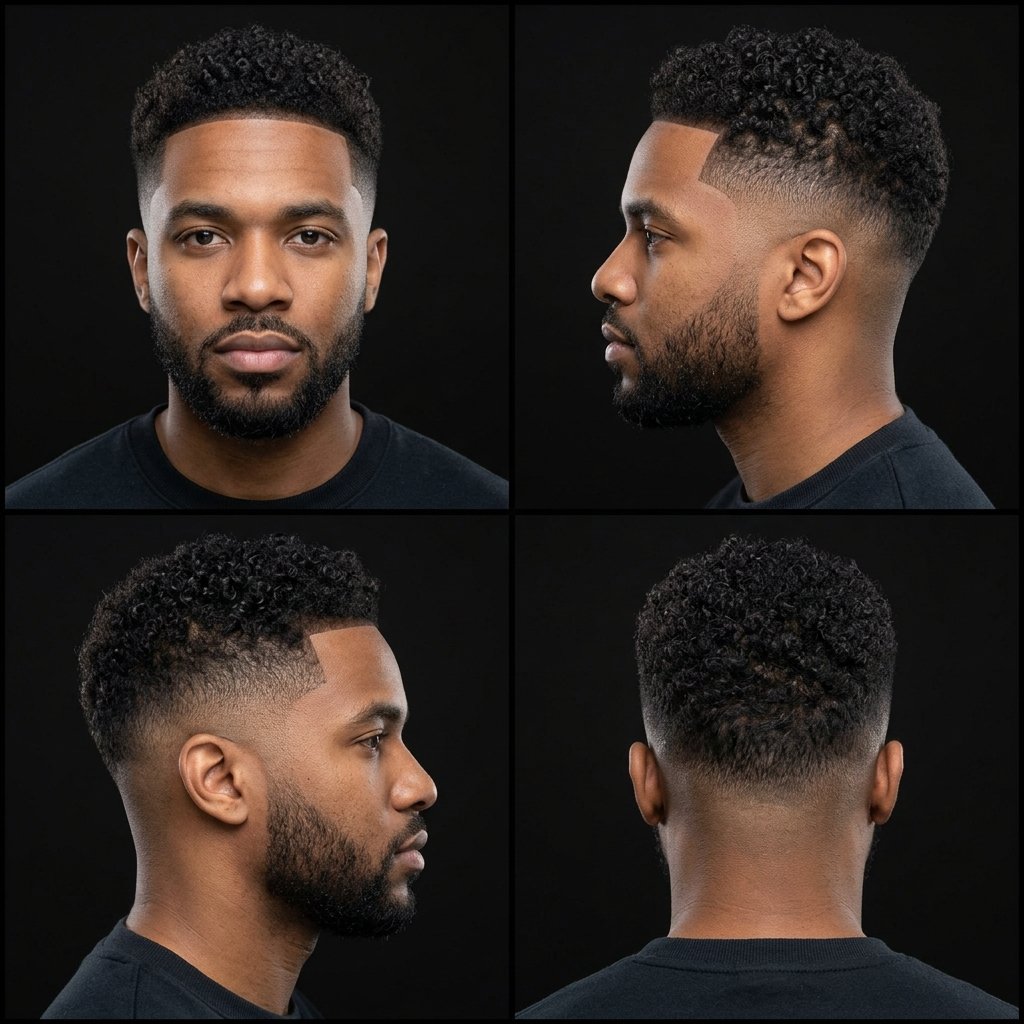
Curly hair needs the most product and the most barber skill to keep the fringe defined. Ask specifically for a curl-cutting technique, not a standard blunt cut, to avoid a bulky look.
Face Shape Matchups
Picking the right version for your face shape matters more than the style name.
Oval Face
Almost every version of the mid taper fade Edgar cut works on an oval face. Go with the classic straight fringe for the most balanced look.
Round Face
A round face benefits from a slightly higher fringe to avoid shortening the face further. Skip the low, heavy bang version.
Square Face
Square faces pair well with the textured Edgar cut, since soft edges balance a strong jawline. Avoid overly blunt, straight lines that emphasize the angles.
Heart-Shaped Face
A heart-shaped face does well with a fuller fringe to balance a narrower chin. The wavy Edgar cut adds width where it’s needed.
Long Face
A longer face benefits from a lower, fuller fringe to shorten the visual length. Avoid pushing the top up high with volume.
Diamond Face
Diamond faces suit the classic straight-line fringe well, since it softens sharp cheekbones. Keep the sides tight to avoid adding bulk at the widest point.
Rectangular Face
Rectangular faces do best with a fringe that adds width, like the textured version. Steer clear of very short fringe styles that expose more forehead.
Age Group Breakdown
Teenagers
Teenagers tend to go for the design or beard-connect versions since they want more personality in the cut.
Young Men
Young men in their 20s usually choose the classic or wavy version for a balance of style and low effort.
Professional Men
Professional men often pick the short fringe or textured version, since it reads as polished rather than trendy in an office setting.
Talking to Your Barber: The Exact Guard Numbers
Don’t just say “Edgar cut” and hope for the best. Use these numbers so your barber knows exactly what you want.
| Section | Guard Number | Notes |
| Top | #3 to #4 guard, or scissor over comb | Longer for wave or curl |
| Fade start point | Mid taper, about 1 inch above ear | Ask for “mid,” not low or high |
| Sides near ear | Skin fade or #1 guard blended | Skin fade holds sharper longer |
| Fringe length | 1.5 to 2 inches | Shorter for low-maintenance version |
| Beard connect (optional) | #1 guard blended into skin | Only if requesting style #7 |
A typical mid taper fade Edgar cut costs between $25 and $60, depending on your city and shop. Designs or beard connects usually add $5 to $20 on top of the base price.
Video Guide: Watch the Fringe Get Cut
If you want to see the technique in motion, search “Edgar cut fringe tutorial” on YouTube. Watching the scissor-over-comb method for the fringe line helps you understand what your barber is actually doing.
Common Mistakes That Ruin an Edgar Cut
- Letting the fringe grow past three weeks without a trim
- Asking for a fade without specifying mid, low, or high
- Skipping the blend between fringe and sides, leaving a harsh step
- Using heavy gel instead of light cream, which weighs the fringe down
- Going too short on top for curly or coily hair types
Maintenance Reality Check
Fringe Trim Frequency
Trim the fringe every two to three weeks to keep the signature line sharp. Waiting longer makes it fall into your eyes and lose shape.
Daily Styling
Daily styling takes under five minutes with a light cream or clay worked through damp hair. Straight and wavy types need the least effort here.
Washing Routine
Wash two to three times a week with a light shampoo to avoid drying out the fringe area. Over-washing makes curly and wavy fringes harder to control.
Mid Taper Edgar Cut vs Other Styles
Edgar Cut vs French Crop
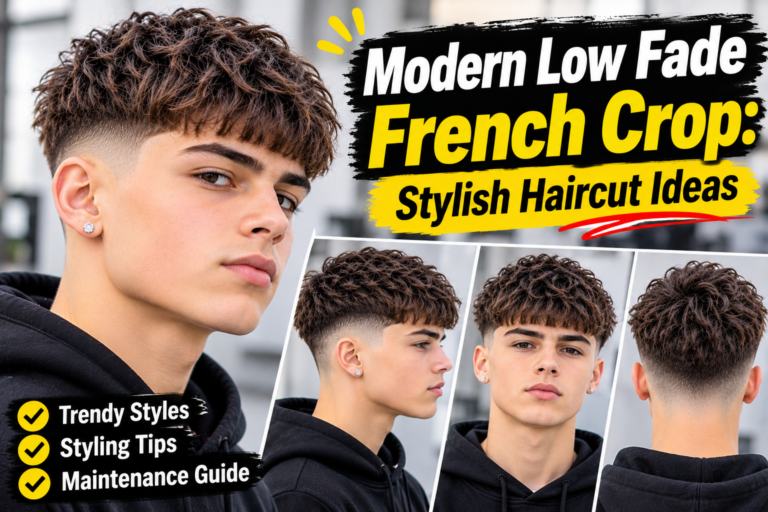
The French crop uses a soft, textured fringe with no hard line, while the Edgar cut keeps a blunt, straight edge. Pick the French crop if you want a softer look with less upkeep on the line itself.
Edgar Cut vs Standard Fringe
A standard fringe usually blends into layers around it, while the Edgar cut fringe stands alone as a defined shape. The Edgar cut needs more frequent trims to hold that defined line.
FAQs
What is a mid taper fade Edgar cut?
It’s a haircut with a fade starting mid-way up the sides, paired with a blunt, straight fringe across the front.
How much does a mid taper fade Edgar cut cost?
Most barbershops charge between $25 and $60, depending on your city and shop.
How do I ask my barber for a mid taper Edgar cut?
Ask for a mid taper fade with a hard, straight fringe line, and give your top length as 1.5 to 2 inches.
How often should I get my Edgar cut trimmed?
Get it trimmed every two to three weeks to keep the fringe line sharp.
Is the Edgar cut the same as a bowl cut?
No, the Edgar cut has a tight fade on the sides, while a bowl cut has no fade at all.
Final Thought
The mid taper fade Edgar cut earns its popularity because it’s sharp, flexible, and works across hair types when it’s cut right. Bring the guard numbers from this guide to your next appointment, and you’ll walk out with exactly what you pictured.