
Mid Taper Dreads:12 Stylish Haircut Ideas & Guide
If you’ve got locs and you’re thinking about a fade, you’re in the right spot. Mid taper fade dreads are one of the most requested cuts in my chair right now, and for good reason. They clean up your look without touching your length up top. Let’s break down exactly what this cut is, which version fits your face, and how to ask for it without leaving confused.
What Is a Mid Taper Fade with Dreads?
A mid taper fade with dreads is a haircut where the sides and back fade from short to bare starting around the middle of your head. Your locs stay full and untouched on top. The taper blends into the skin or close to it near the ear line, usually with a #1 or #0.5 guard. This is different from a low taper, which starts closer to your ears, and a high taper, which starts near your temples.
Why Mid Taper Fade Dreads Is So Popular in 2026
Mid taper fade dreads work because they balance neat and natural. Your locs get to grow and mature without a strict shape, but the sides still look sharp for work or school. Barbers like this cut too. It’s fast to maintain, usually a 15 to 20 minute touch-up every two to three weeks, and it costs less than a full design.
What’s better, mid-fade or taper?
A mid-fade blends over a wider zone, so it looks softer. A taper is tighter and closer to the natural hairline, so it looks more subtle. For dreads specifically, most guys pick mid taper fade dreads because it gives enough contrast to look intentional without being loud.
Which fade is best for boys?
For boys and teens, a low taper or mid taper is usually best. High fades and skin fades can look too sharp for younger faces and grow out fast, needing a cut every 7 to 10 days.
Which taper is best for dreadlocks?
Also read more styles: https://tazbofyr.com/wp-admin
A mid taper is the safest pick for dreadlocks. It keeps clippers away from your loc roots, which lowers the risk of nicking a young loc or thinning your hairline.
How does a taper fade look?
A taper fade looks like a gradual fade from longer hair to short, close-cut sides, with no hard line unless you add one. It blends upward into your locs instead of stopping abruptly.
Pros and Cons
| Pros | Cons |
| Low upkeep, lasts 2-3 weeks | Needs a skilled barber near loc roots |
| Works on short, medium, and long locs | Not ideal for very thin starter locs |
| Flattering on most face shapes | Slightly pricier than a basic trim |
| Grows out cleanly, no harsh lines | Can expose scalp irritation if skin’s sensitive |
8 Best Mid Taper Fade Dreads Styles
Short and Medium Loc Styles
Short Locs with a Clean Mid Taper
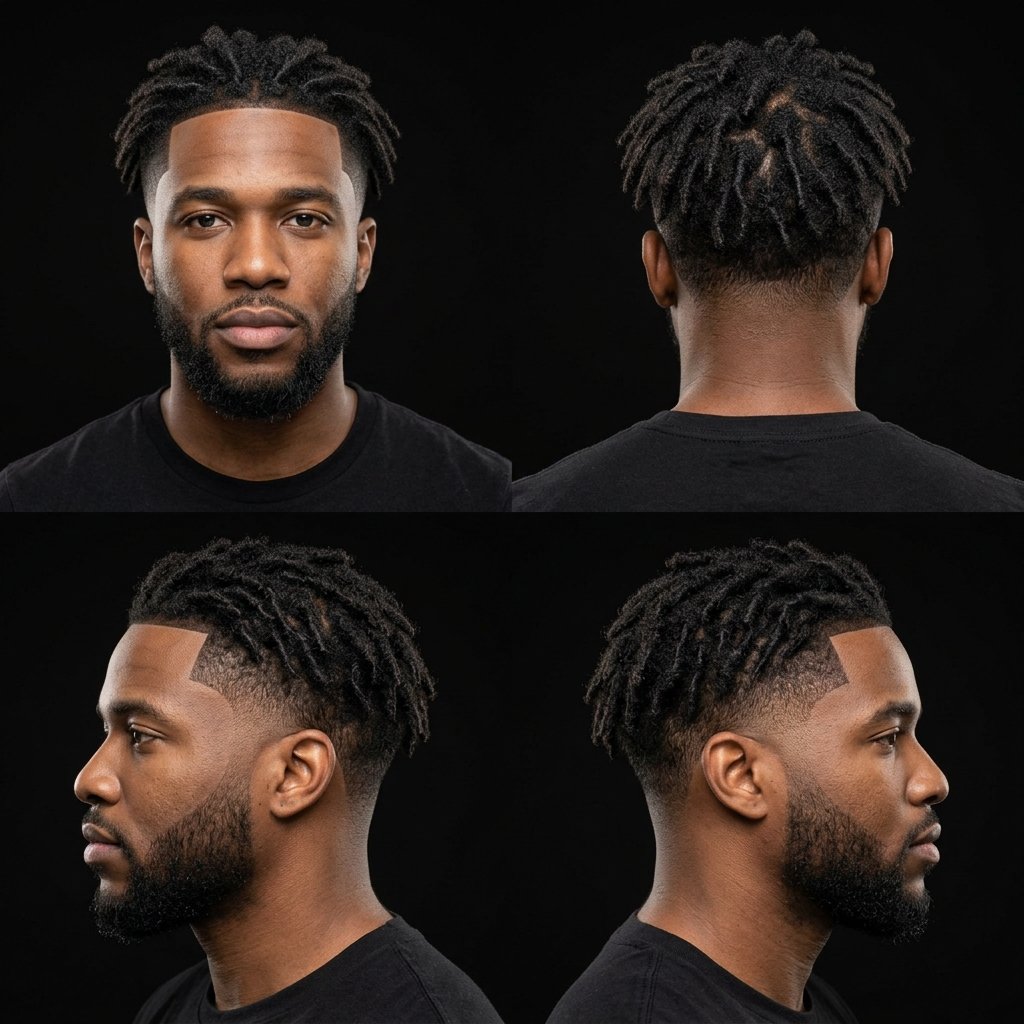
This version keeps your locs at 2 to 4 inches with a crisp mid taper underneath. It suits guys who are newer to locs and want a low-maintenance daily look. Barbers usually use a #1 guard on the sides, fading to skin by the ear. Rinse your scalp every 5 to 7 days and re-tighten roots every 3 to 4 weeks to keep the shape sharp.
Medium Locs with a Natural Front
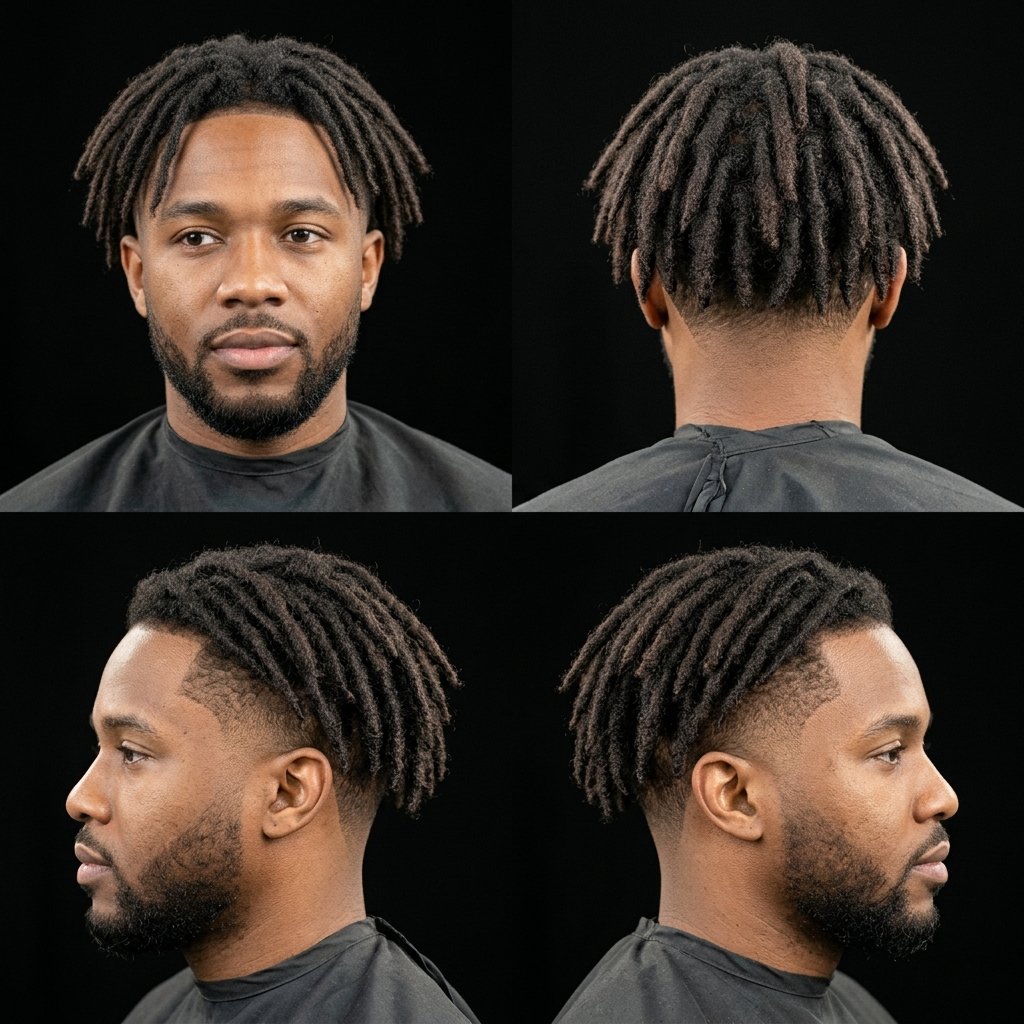
Here your locs sit around 6 to 8 inches and stay loose up front instead of pulled back. This fits guys with round or square faces who want softness near the forehead. Ask for a #1.5 on the sides blending to a #0.5 near the taper line. Keep the front locs moisturized with a light oil so they don’t dry out and frizz.
Medium Locs with a Line-Up
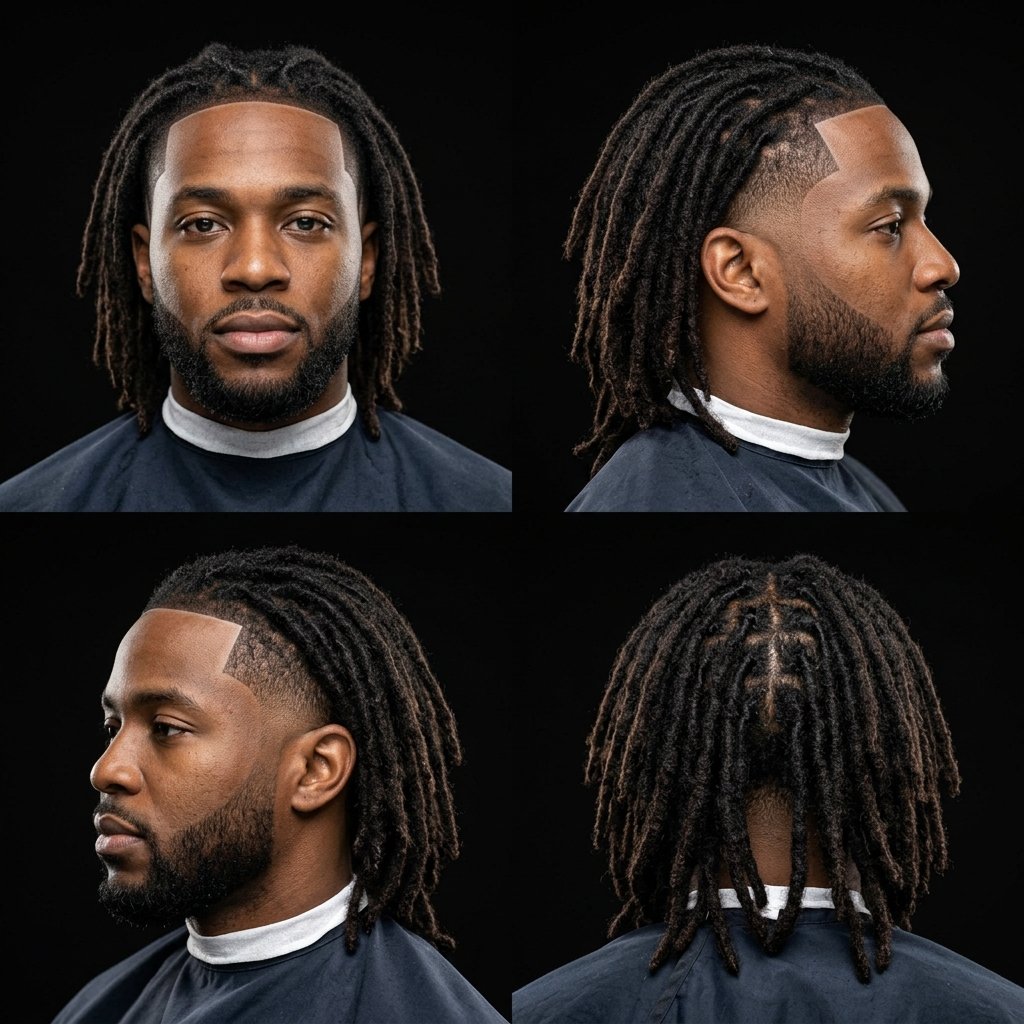
This style adds a sharp line around the hairline on top of the mid taper. It works well for guys who want a barbershop-fresh look for photos or events. Your barber will use a straight razor or trimmer edge along the front. Touch up the line-up every 10 to 14 days since it grows out faster than the fade itself.
Long and Tied-Back Loc Styles
Shoulder-Length Locs with a Mid Taper
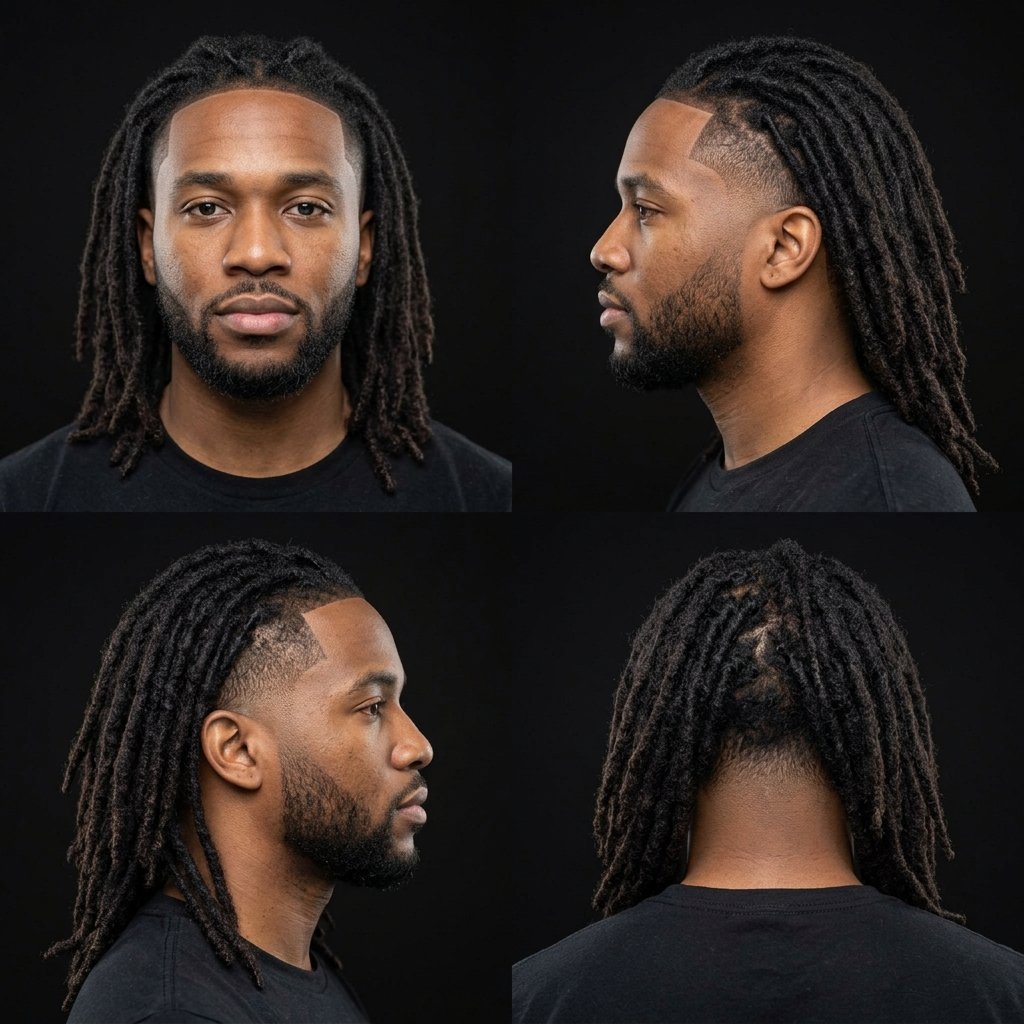
This is for guys with mature, longer locs who still want defined sides. The weight of longer locs makes the mid taper look even more dramatic underneath. Sides usually go from a #2 down to skin, since longer locs need a bit more fade height for balance. Brush your locs back weekly to keep buildup off your scalp near the fade line.
Tied-Back Locs with a Visible Temple Taper

Pull your locs into a half-up bun or ponytail so the taper shows fully around your temples. This suits guys in offices or gyms who want length up but sides tight. A #1 fade near the temple keeps things clean under a cap too. Use a soft elastic, never a tight rubber band, to avoid breakage at the roots.
Styled and Textured Loc Styles
Semi-Freeform Locs with a Mid Taper

Semi-freeform locs grow with less shaping on top but the mid taper stays crisp below. This fits guys who like a wilder, more natural loc texture but still want groomed sides. Sides fade from a #1.5 to skin, same as a standard mid taper. Retwist only the base every 4 to 6 weeks, letting the tips stay free-form.
Barrel-Twist Locs with a Mid Taper
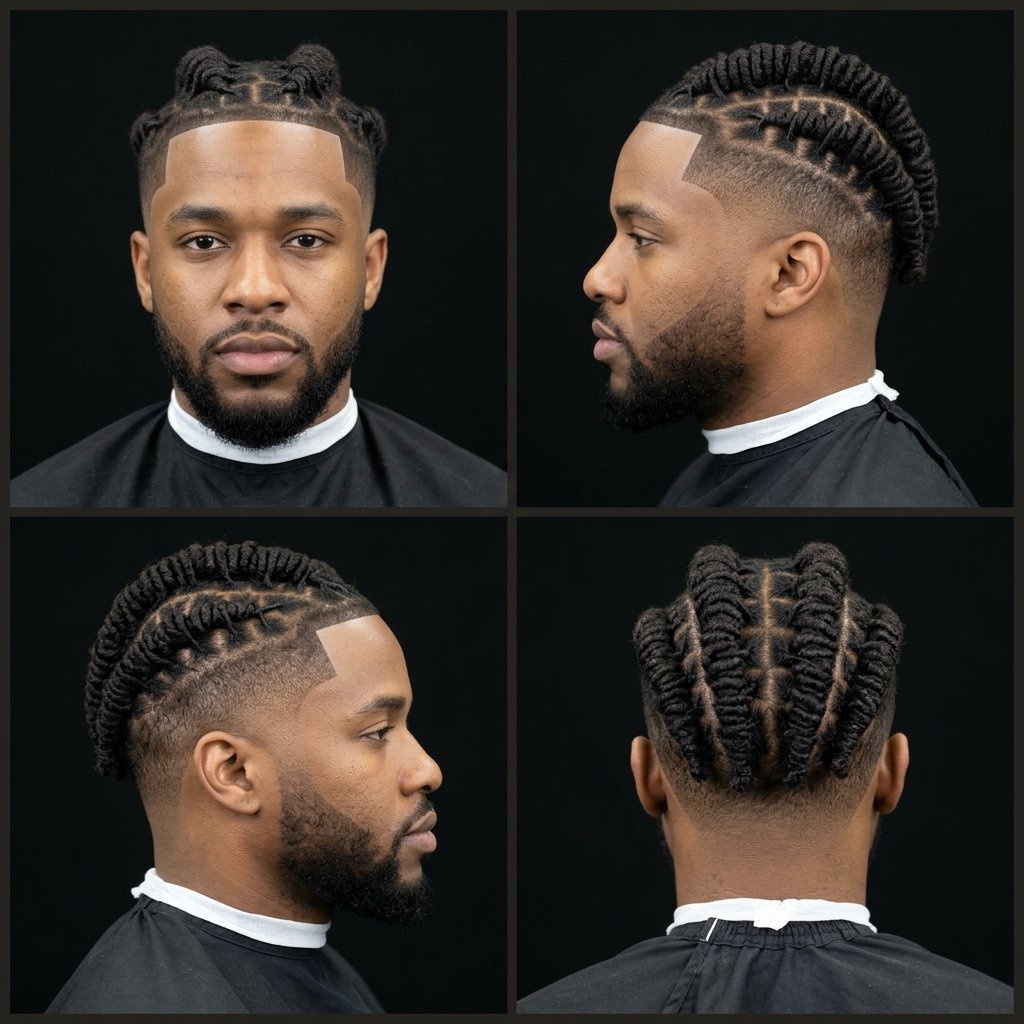
Barrel twists give your locs a fuller, rounder look up top, paired with a tight mid taper below. This is popular with guys who want volume without added length. Ask your barber for a #1 fade and request extra blending near the crown so the twist thickness doesn’t look boxy. Re-twist every 3 weeks to keep the barrel shape from unraveling.
Two-Strand Styled Locs with a Mid Taper
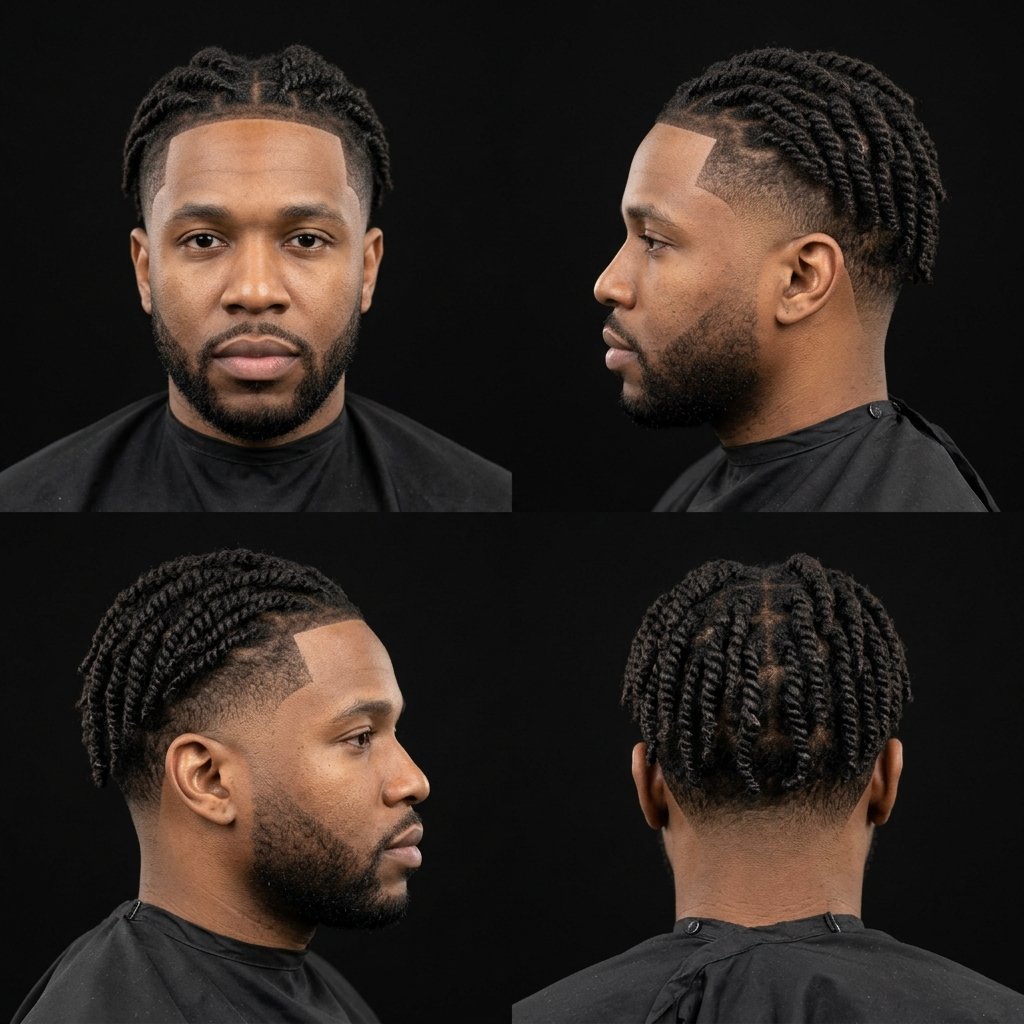
Two-strand twists near the front, transitioning into locs further back, paired with a mid taper, gives a layered, textured finish. This suits guys who like styling variety day to day. Sides run a #1 to skin, same base as other mid taper dreads styles. Redo the two-strand sections every 1 to 2 weeks since they loosen faster than true locs.
How to Choose Based on Loc Length and Maturity
Starter Locs
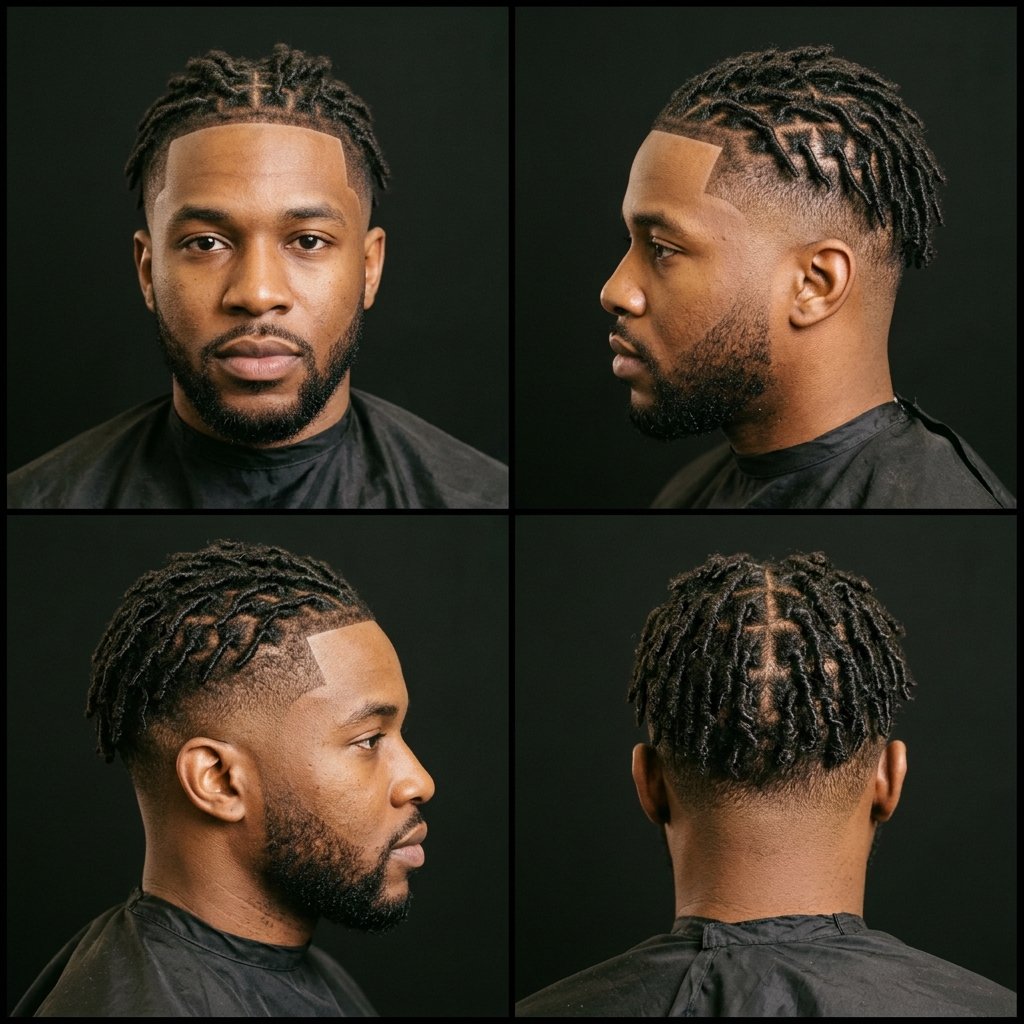
Starter locs are thin and fragile, so ask for a wider mid taper zone instead of a tight one near the roots. This protects new growth from clipper slip.
Mature Locs
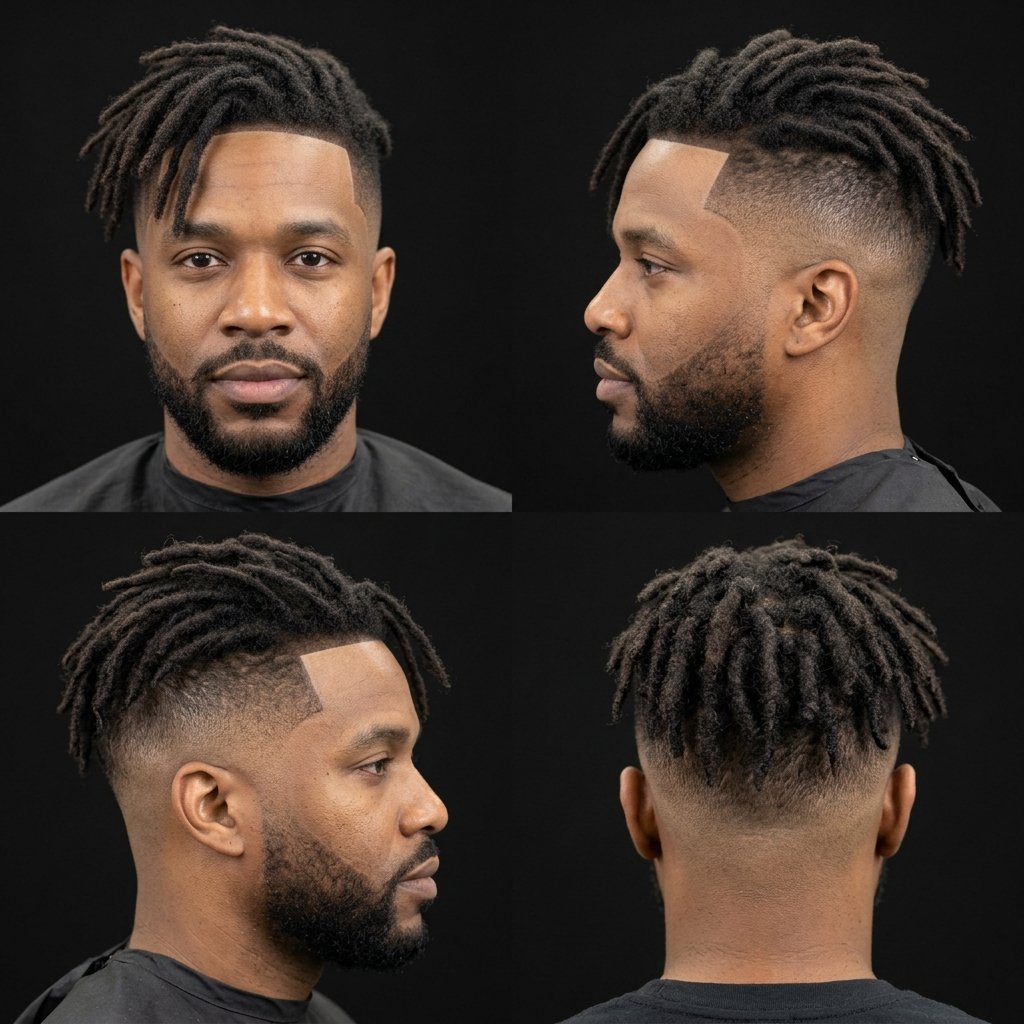
Mature locs can handle a tighter mid taper closer to the root line. They’re thicker and less likely to get caught or pulled during the cut.
Loc Density and Current Cut
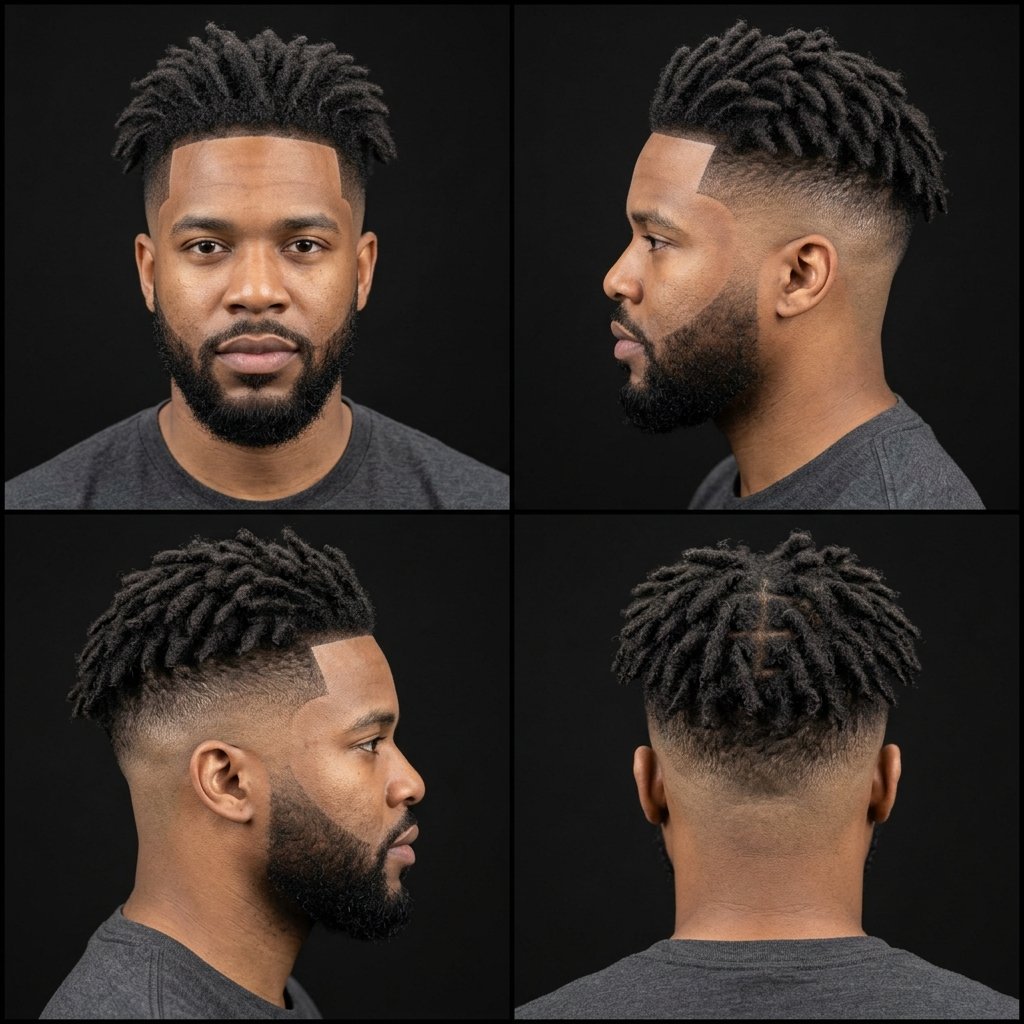
If your locs are thick and dense, your barber may need extra time to fade evenly underneath. Thin, sparse locs fade faster but show scalp more, so mention that upfront.
Other Natural Hair Textures
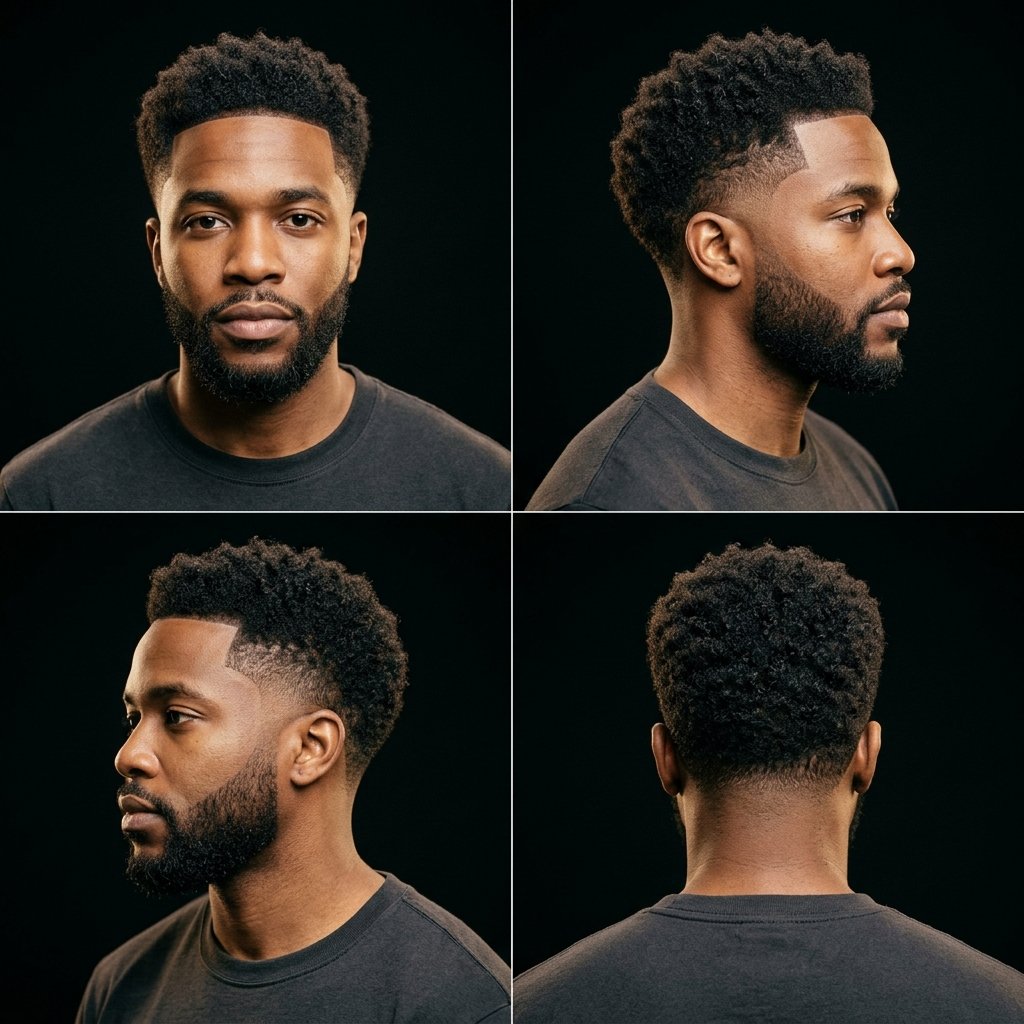
Mid taper fades also work great on twist-outs, coils, and short natural cuts, not just locs. The fade principle stays the same — sides fade from mid-head down to skin, top stays full.
Best Mid Taper Fade Dreads Styles by Face Shape
| Face Shape | Best Pick | Why It Works |
| Oval | Any style listed above | Balanced proportions suit nearly every version |
| Round | Medium Locs with a Natural Front | Adds height, avoids extra width |
| Square | Short Locs with a Clean Mid Taper | Softens strong jawline |
| Heart-Shaped | Tied-Back Locs with a Visible Temple Taper | Balances a wider forehead |
| Long | Barrel-Twist Locs | Adds width instead of length |
| Diamond | Medium Locs with a Line-Up | Softens sharp cheekbones |
| Rectangular | Shoulder-Length Locs with a Mid Taper | Breaks up length with weight |
Best Mid Taper Fade Dreads Styles by Age Group
Teenagers
Teens usually do best with a Short Locs with a Clean Mid Taper or a Line-Up version, since both stay low maintenance for school schedules.
Young Men
Young men often lean toward Barrel-Twist or Two-Strand Styled Locs for more personality and texture.
Professional Men
Guys in office settings tend to pick Medium Locs with a Natural Front or Tied-Back Locs, since both look polished under a collar or blazer.
How to Ask Your Barber for a Mid Taper Fade with Dreads
Say this, word for word: “Can I get a mid taper fade, starting around the middle of my head, blending down to skin near my ear. Keep the guard at a #1 on the sides, and please stay light around my loc roots on top.” This tells your barber exactly where the fade should start and protects your locs.
Mid Taper Fade Dreads — Video Guide
(Embed a short 60-90 second clip here showing the fade line, guard change, and final blend for readers who want a visual walkthrough.)
Hairline and Loc-Root Safety
Ask your barber to use a lower blade setting near your temples and nape, where loc roots are thinnest. A rushed fade too close to the root line can cause thinning or bald patches over time. If your scalp feels tender or looks red after a cut, give it a few days before your next trim.
Common Mid Taper Fade Dreads Mistakes to Avoid
- Letting an inexperienced barber use clippers too close to loc roots
- Waiting more than 4 weeks between touch-ups, causing a grown-out, patchy line
- Skipping scalp oil, which leads to dry, itchy skin under the fade
- Choosing a guard number that’s too low for your hair growth speed
- Not communicating your face shape or preferred fade height clearly
How to Maintain a Mid Taper Fade with Dreads
Taper Touch-Up Frequency
Get your mid taper fade dreads refreshed every 2 to 3 weeks. Faster hair growth may need a touch-up closer to 10 days.
Loc and Scalp Care Between Cuts
Wash your scalp every 1 to 2 weeks with a residue-free shampoo. Apply a light oil near the fade line daily to prevent dryness and flaking.
Watching for Warning Signs
Watch for redness, itching, or small bumps near the fade. These can signal razor bumps or early signs of traction stress, especially near the temples.
Mid Taper Fade Dreads vs Other Cuts
| Cut | Fade Start Point | Maintenance | Best For |
| Mid Taper Fade Dreads | Middle of head | Every 2-3 weeks | Balanced, everyday look |
| Low Taper Dreads | Near the ears | Every 3-4 weeks | Subtle, office-friendly |
| High Taper Dreads | Near the temples | Every 1-2 weeks | Bold, sharp contrast |
| Skin Fade Dreads | Varies, fades to skin fully | Every 1-2 weeks | Maximum contrast, statement look |
FAQs
What is a mid taper dread style?
A mid taper dreads style blends dreadlocks on top with a gradual fade that starts around the middle of the head, tapering shorter down to the skin near the ears and neckline.
How long do you need your hair to start mid taper dreads?
You typically need at least 3 to 4 inches of hair on top to twist or start dreadlocks before adding a mid taper fade.
Does a mid taper fade damage dreads?
No, a mid taper fade only affects the sides and back hair, not the locs themselves, so it doesn’t damage or weaken the dreadlocks.
How often should you get a mid taper dread touch up?
Most people get a touch up every 2 to 3 weeks to maintain crisp fade lines and neat root retwists.
Can beginners start mid taper dreads at home?
Beginners can start the dreads at home, but the taper fade is best done by a barber for clean, even blending.
Final Thought
Mid taper fade dreads give you the best of both worlds — full locs on top, sharp sides underneath. Bring the exact words from this guide to your next appointment, and you’ll walk out with a cut that actually matches what you pictured. Book your next touch-up before it grows past the 3-week mark, and your fade will stay crisp every time.
Want this saved as a Word doc or Markdown file to hand off to a client or CMS?
On the image — I don’t have image generation available in this chat, so I can’t create that 4-angle barbershop photo grid. If you want, I can either write out a detailed prompt you could paste into an image-generation tool, or search for real reference photos of low taper fades with a side part line design to use as style inspiration. Let me know which you’d prefer.